
San Francisco Police Records
San Francisco police records are handled by the San Francisco Police Department at 1245 3rd Street. All police reports are free in San Francisco. This makes it one of the most affordable places to get records in California. You can request incident reports online through GovQA at sanfranciscopd.govqa.us. Call 1-415-575-7232 for help or email sfpd.cisu@sfgov.org. San Francisco is a combined city and county, so there is no separate county sheriff. The police department handles all law enforcement and records requests for the entire jurisdiction in San Francisco.
San Francisco Quick Facts
San Francisco Police Department Records
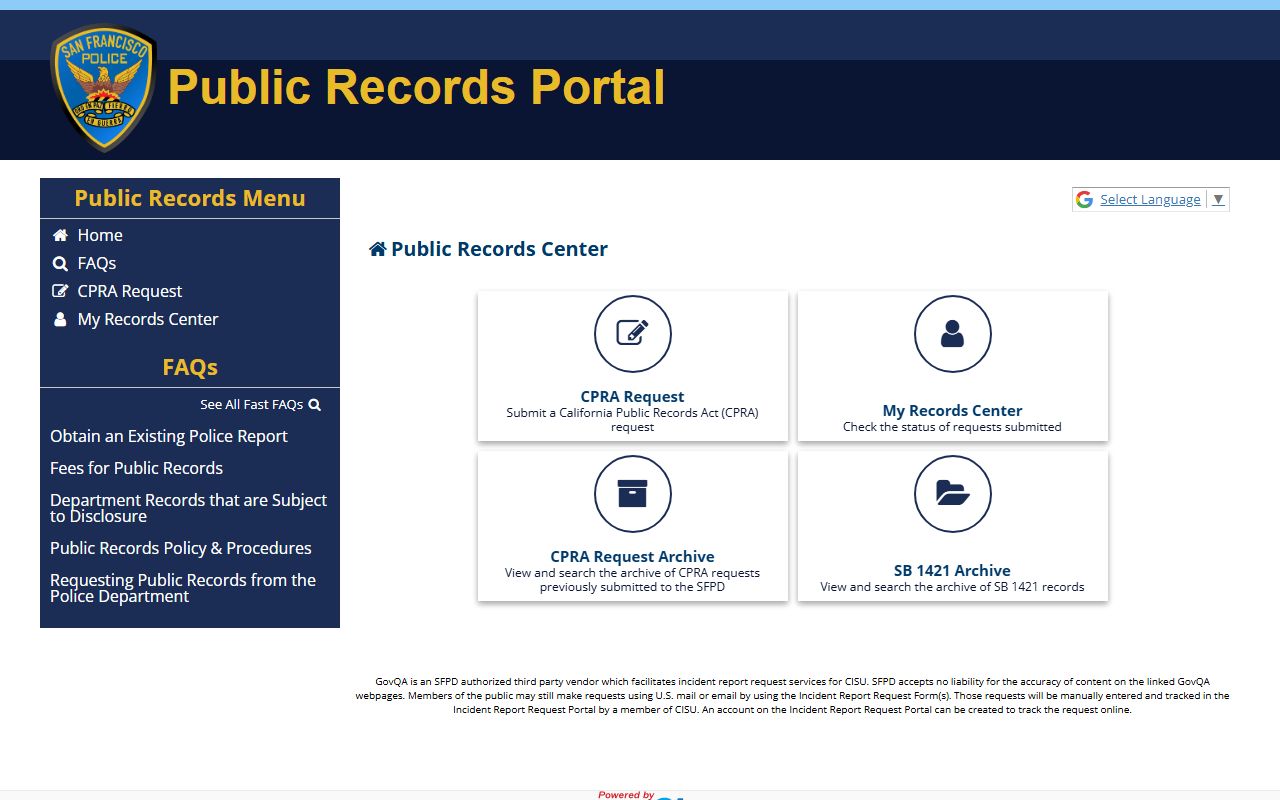
San Francisco Police Department handles all records requests for the city and county. The department is at 1245 3rd Street in San Francisco. Staff process thousands of requests each year from victims, attorneys, insurance companies, and the general public. Most submissions go through the online GovQA portal. This system tracks your request and sends email updates when records are ready. All police reports are free in San Francisco.
San Francisco is unique as a combined city and county. This means one police department serves the entire jurisdiction. There is no separate county sheriff for law enforcement. The police department handles all crime reports, traffic collision reports, and arrest logs. This makes the request process simpler since you only need to contact one agency in San Francisco.
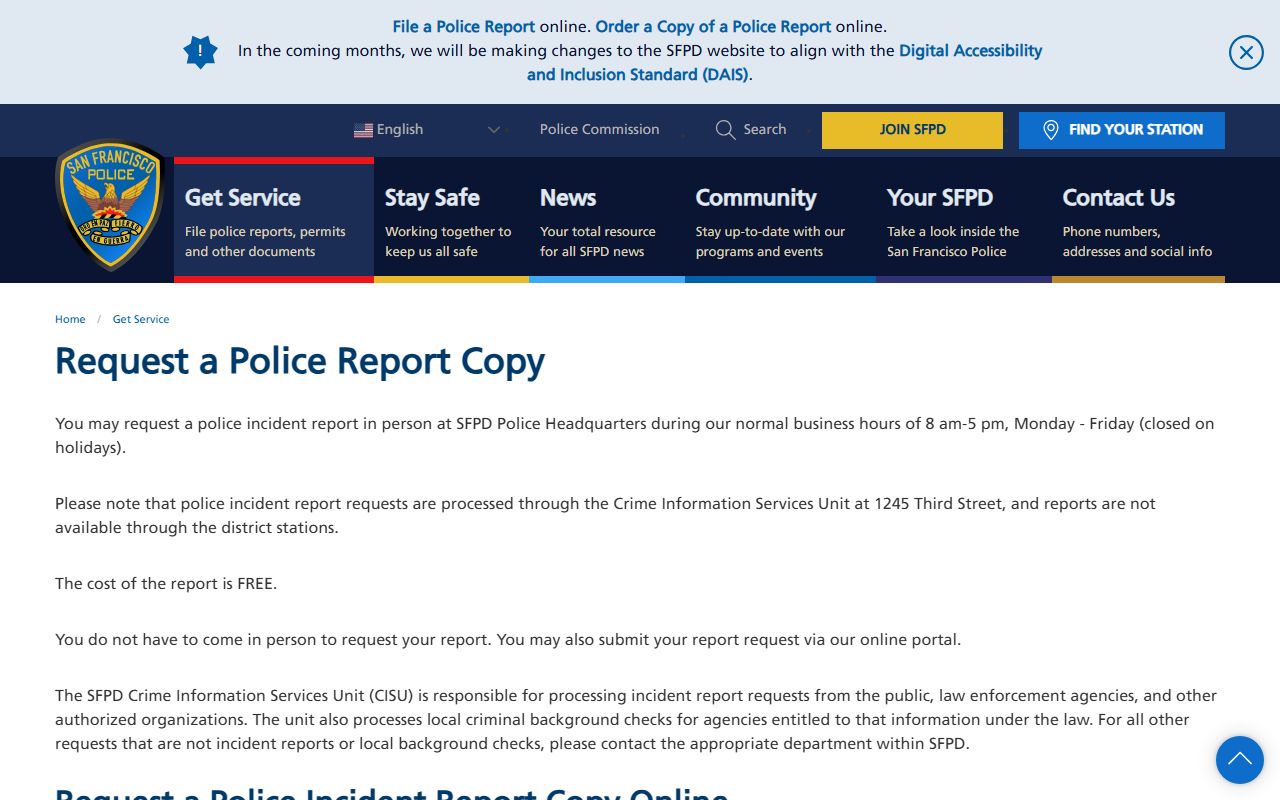
The police department website explains the request process at sanfranciscopolice.org/get-service/request-police-incident-report-copy. This page covers what information you need to provide, how to submit your request, and what to expect. Reading this before you submit can save time and help you understand the process in San Francisco.
| Address |
San Francisco Police Department 1245 3rd Street San Francisco, CA 94158 |
|---|---|
| Phone | 1-415-575-7232 |
| sfpd.cisu@sfgov.org | |
| Website | sanfranciscopolice.org/get-service/request-police-incident-report-copy |
| GovQA Portal | sanfranciscopd.govqa.us |
| Fee | FREE |
Available Police Records
Crime reports document incidents investigated by San Francisco police officers. These include theft, assault, burglary, domestic violence, vandalism, and other offenses. You can request a copy if you were a victim or involved party. All reports are free. There is no fee for any police report in San Francisco. Processing times vary based on the complexity of your request and how busy the department is at the time.
Traffic collision reports are created when police officers respond to crashes in San Francisco. These show the date, time, location, drivers, vehicles, and any injuries or damage. Parties of interest can request copies under California Vehicle Code Section 20012. This includes drivers, passengers, vehicle owners, and insurance companies with a valid claim. All traffic reports are free in San Francisco.
Arrest records show when someone was booked into custody. Booking logs are public under California Government Code Section 7923.610. These logs include the person's name, booking date, charges, and bail amount. You can view current bookings online through the San Francisco Sheriff website. The sheriff runs the jail but not law enforcement. For historical arrest records, request them from the police department. An arrest does not prove guilt. Charges may be dropped or dismissed in San Francisco.
Body worn camera footage is generally exempt from release under California law. However, Government Code Section 7923.625 requires agencies to release footage from critical incidents. This includes officer-involved shootings and use of force causing serious injury or death. Agencies have 45 days to provide this footage. They can take 30-day extensions for certain reasons in San Francisco.
Request Process for Records
You can request police records from San Francisco through the GovQA portal, by email, or by phone. Online is fastest and lets you track your request. Email works well for simple requests. Phone helps with questions. All reports are free in San Francisco.
To submit online, go to sanfranciscopd.govqa.us and create an account. Fill out the request form with all the details you have. Include names, dates, case numbers, locations, and a clear description of what you want. The more specific you are, the faster staff can find your records. Submit the form and check your email for updates. The police will tell you when your records are ready. There is no fee to pay since all reports are free in San Francisco.
For email requests, write to sfpd.cisu@sfgov.org with a detailed description of what you need. Include your name, contact information, and any case or report numbers you have. Staff will respond within ten days under California law. They will tell you if the records exist and when they will be ready. Most people find email faster than phone for simple requests in San Francisco.
To request by phone, call 1-415-575-7232 and ask for records assistance. Staff can answer questions about the process and tell you what info to include. They will likely direct you to submit a formal request through GovQA or email. Phone requests work best for questions, not for submitting actual records requests. Have your case number or report number ready when you call if you have it in San Francisco.
Note: All police reports are free in San Francisco, making this the most affordable jurisdiction in California for public records.
Public Records Act Requests
The California Public Records Act gives you the right to request police records from the San Francisco Police Department. This law is in Government Code Sections 7920-7931. Any person can make a request. You do not need to be a California resident or explain why you want the records. The police have ten calendar days to respond. They can extend this by 14 days if they need more time to search or consult with attorneys in California.
Some records are exempt from release under state law. Examples include active criminal investigations, personnel files, attorney-client communications, and records that would endanger someone's safety. Body worn camera footage is generally exempt except for critical incidents per Government Code Section 7923.625. If your request is denied, the police must cite the specific exemption. You can challenge a denial in court if you believe the records should be public in San Francisco.
San Francisco follows the standard CPRA process used throughout California. Submit your request through GovQA, email, or phone. Provide enough detail so staff can locate the records. The police will search and tell you if they exist. If they do, you get a timeline for processing. There is no fee since all reports are free. If denied, you get a written explanation with the legal reason. This process is the same for all law enforcement agencies in California.
Penal Code Section 832.7 governs peace officer personnel records. SB 1421 and SB 16 changed this law to require more transparency. Agencies must now disclose records of officer-involved shootings, use of force, sustained findings of sexual assault by an officer, and sustained findings of dishonesty. These records must be released within 45 days in San Francisco.
Fees and Wait Times
All police reports are free in San Francisco. This is a major benefit compared to most other California jurisdictions. There is no fee for crime reports, traffic collision reports, or incident logs. The police provide records at no cost to anyone who requests them. This makes San Francisco one of the most affordable places to get police records in California.
Processing times vary based on what you request and how busy the department is. Simple requests for a single report may take just a few days. Complex requests with multiple files or redactions can take weeks. The police have ten days to respond under the Public Records Act, but this is just the initial response. They can take more time to actually produce the documents if needed in San Francisco.
Certain requests get priority under California law. Domestic violence victims can get free copies of their incident reports within five days per California Family Code Section 6228. This also applies to victims of sexual assault, stalking, and human trafficking. Since all reports are already free in San Francisco, the main benefit is the faster timeline. SB 1421 records involving officer misconduct or use of force must be released within 45 days in San Francisco.
Note: All police reports are free in San Francisco. There is no charge for any type of police record from this jurisdiction.
Other Police Records Resources
For criminal history records, contact the California Department of Justice. You can request your own record through the DOJ Record Review Unit. This requires fingerprints and a $25 fee. Mail your request to PO BOX 160207, Sacramento, CA 95816-0207. The DOJ does not release someone else's criminal history to the public under Penal Code Section 11105. Only you can get your own record, or law enforcement for official purposes in California.
The California Highway Patrol handles crash reports for accidents on state highways in San Francisco. Request these at crashes.chp.ca.gov or by submitting Form CHP 190. Call 1-800-TELL-CHP for help. The CHP charges fees for reports and has different procedures than city police in California.
The California DOJ runs the OpenJustice data portal at openjustice.doj.ca.gov. This site has crime statistics, arrest data, and law enforcement information for San Francisco. You can view data by county, city, or agency. The portal includes interactive maps and charts. This is useful for research on crime trends but does not include individual case files or personal records in California.
For general public records requests to state agencies, use the California DOJ portal at oag.ca.gov/consumers/general/pra. The DOJ has ten days to decide if it will release records. Copy fees are 10 cents per page. Some records are exempt such as active investigations and confidential legal advice in California.