
Search Police Records in California
California police records include arrest reports, incident files, traffic crash documents, and body camera footage from law enforcement agencies statewide. These records are held by local police departments, county sheriff offices, and state agencies like the California Department of Justice. You can request police records through the California Public Records Act. Many agencies now offer online portals for submitting requests. Some counties provide direct access to booking logs and crash reports. The process varies by agency, but most respond within ten days of your request.
California Police Records Quick Facts
State Police Records Systems
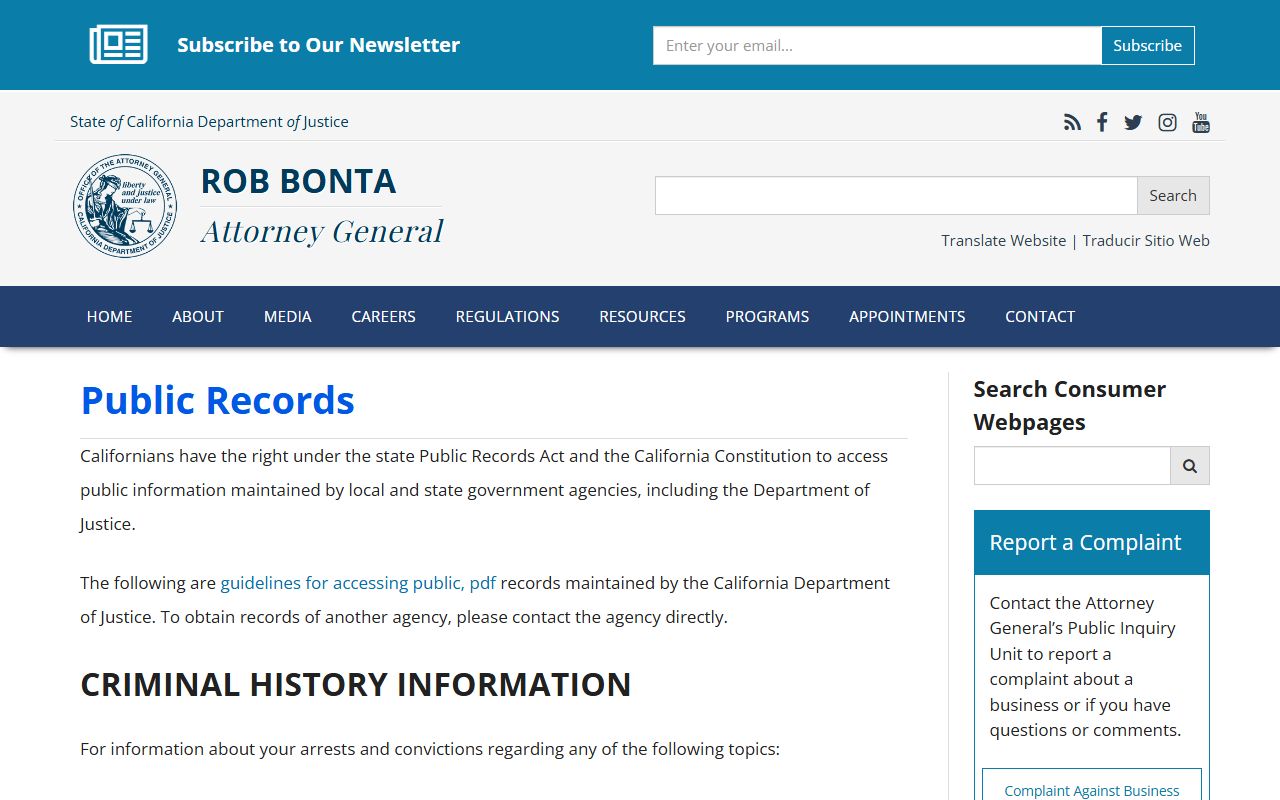
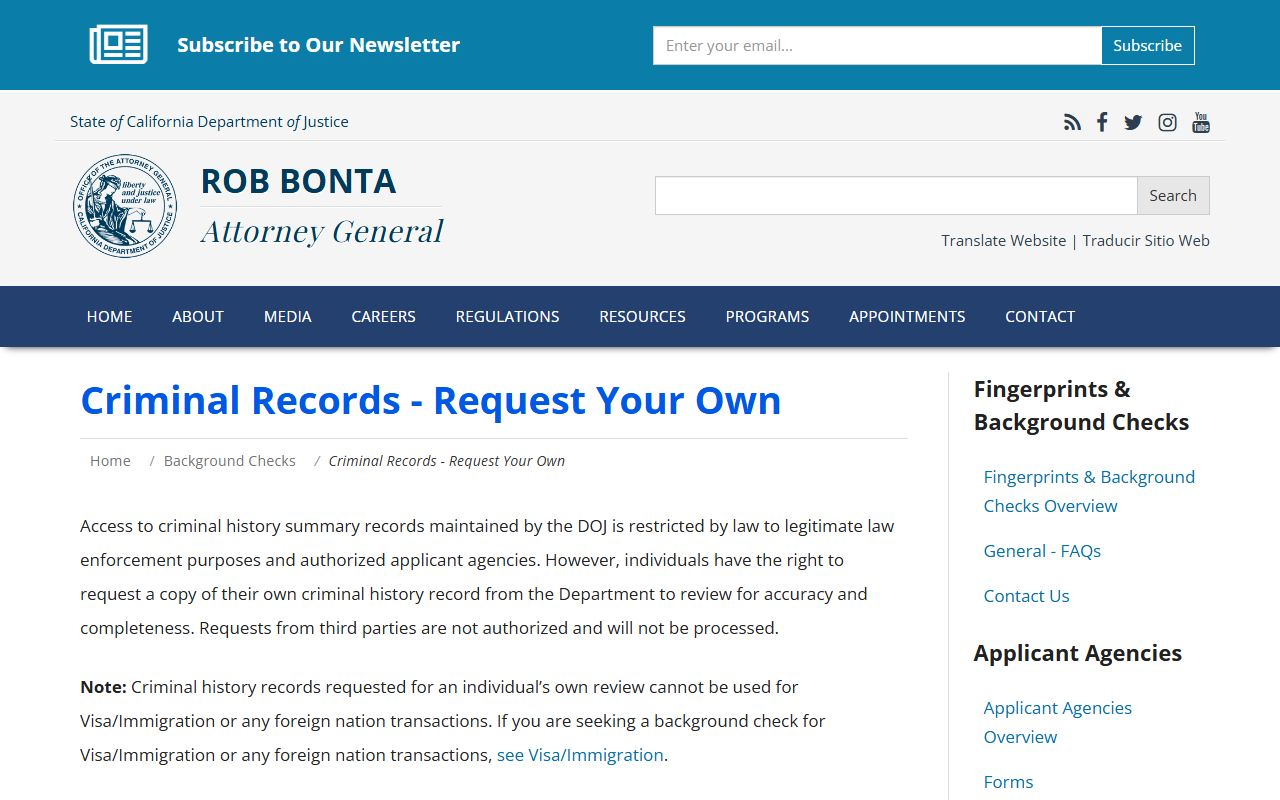
The California Department of Justice maintains criminal history information for the entire state. You can request your own criminal record through the DOJ Record Review Unit. The process requires fingerprints and a fee of $25. Mail your request to PO BOX 160207, Sacramento, CA 95816-0207. You cannot get someone else's arrest history through this system. The DOJ does not release criminal records to third parties under Penal Code Section 11105. Only law enforcement can access these files for official use.
For general public records requests to the DOJ, use their online portal at oag.ca.gov/consumers/general/pra. The DOJ has ten days to decide if it will release records. A 14-day extension may apply in some cases. Copy fees are 10 cents per page. Some records are exempt from release. Examples include personnel files, active investigations, and confidential legal advice. You can reach the Record Review Unit at 916-227-3849 with questions about criminal history requests in California.
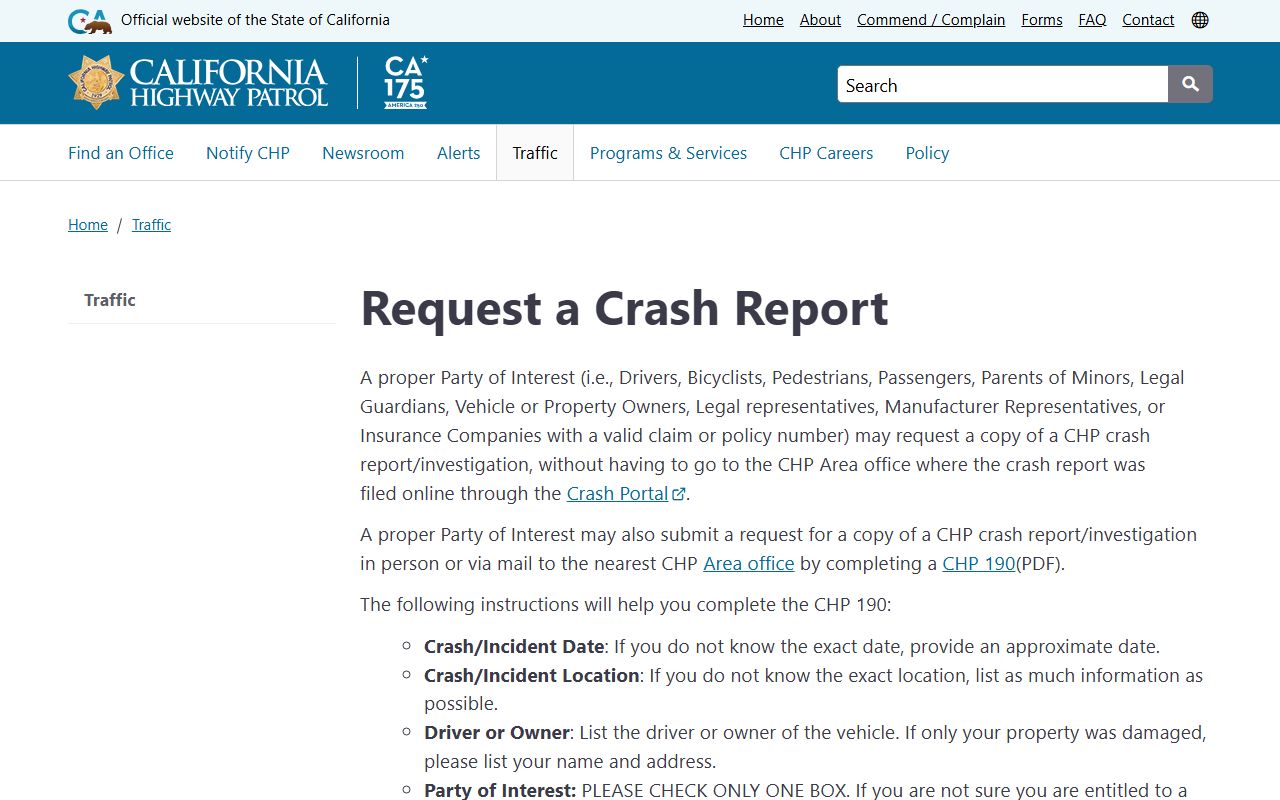
The California Highway Patrol handles all traffic collision reports for crashes investigated by CHP officers. You can request a crash report online at crashes.chp.ca.gov. Only parties of interest can get copies. This includes drivers, passengers, vehicle owners, insurance companies with a claim number, and legal representatives. The CHP charges fees for reports. You can also submit Form CHP 190 by mail or fax. Call 1-800-TELL-CHP for help with crash report requests in California.
County Sheriff and Police Departments
Each county sheriff and city police department keeps its own records in California. These include arrest logs, incident reports, case files, and booking photos. Most agencies have a records division that handles public requests. Contact info varies by agency. Some use online portals while others require mail or in-person requests.
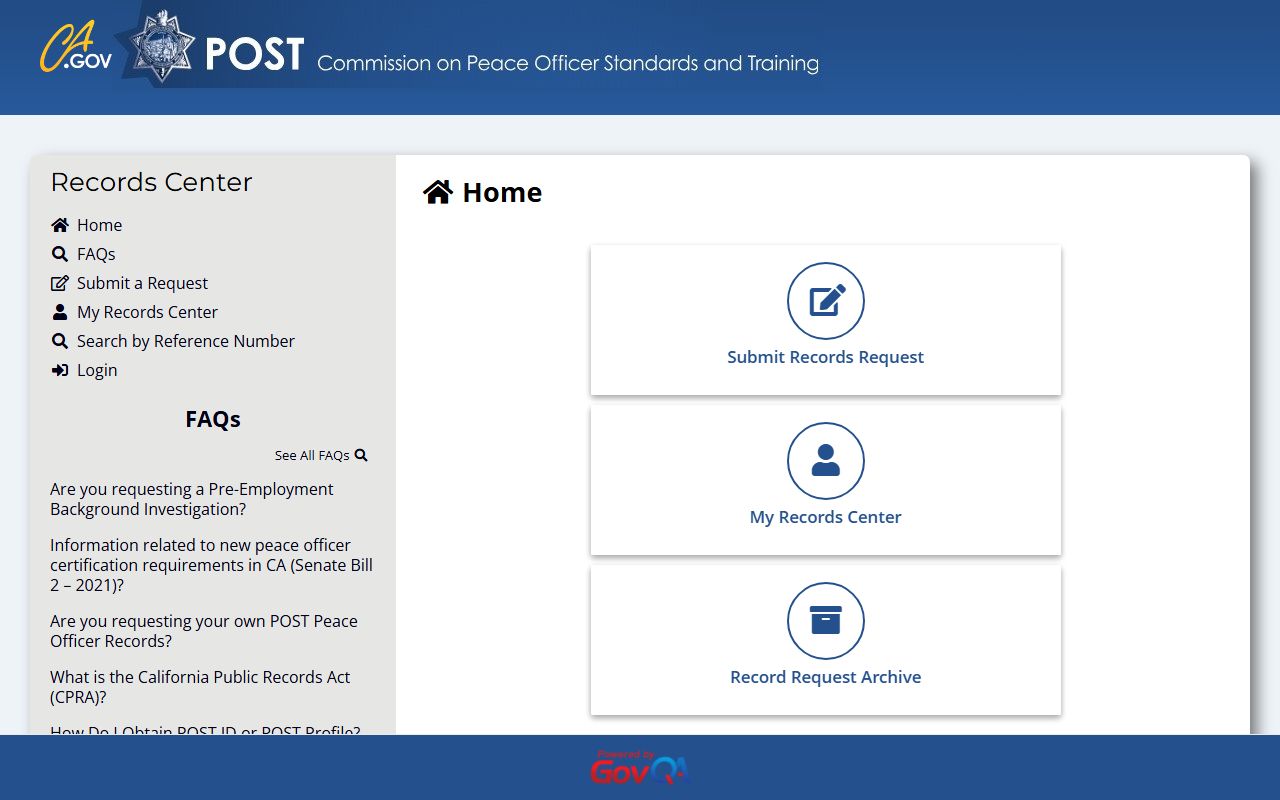
Many California counties use third-party systems to manage records requests. NextRequest is common in counties like Alameda, Fresno, Los Angeles, Sacramento, and San Diego. GovQA is used by San Francisco and Long Beach. Citizen RIMS serves smaller counties like Humboldt, Lassen, and Yuba. These portals let you submit requests online and track their status. You get an email when your request is ready. Some agencies charge fees for copies, while others provide digital records at no cost.
Los Angeles County uses a special transparency portal for SB 1421 records at lasdsb1421.powerappsportals.us. This covers officer-involved shootings and serious misconduct cases. Riverside County has a similar public access portal. These systems comply with California laws requiring disclosure of certain police records. Most agencies must release these records within 45 days of a request.
Note: San Bernardino County cannot provide reports from April 23, 2019 to April 7, 2023 due to a network service interruption.
California Public Records Act Requests
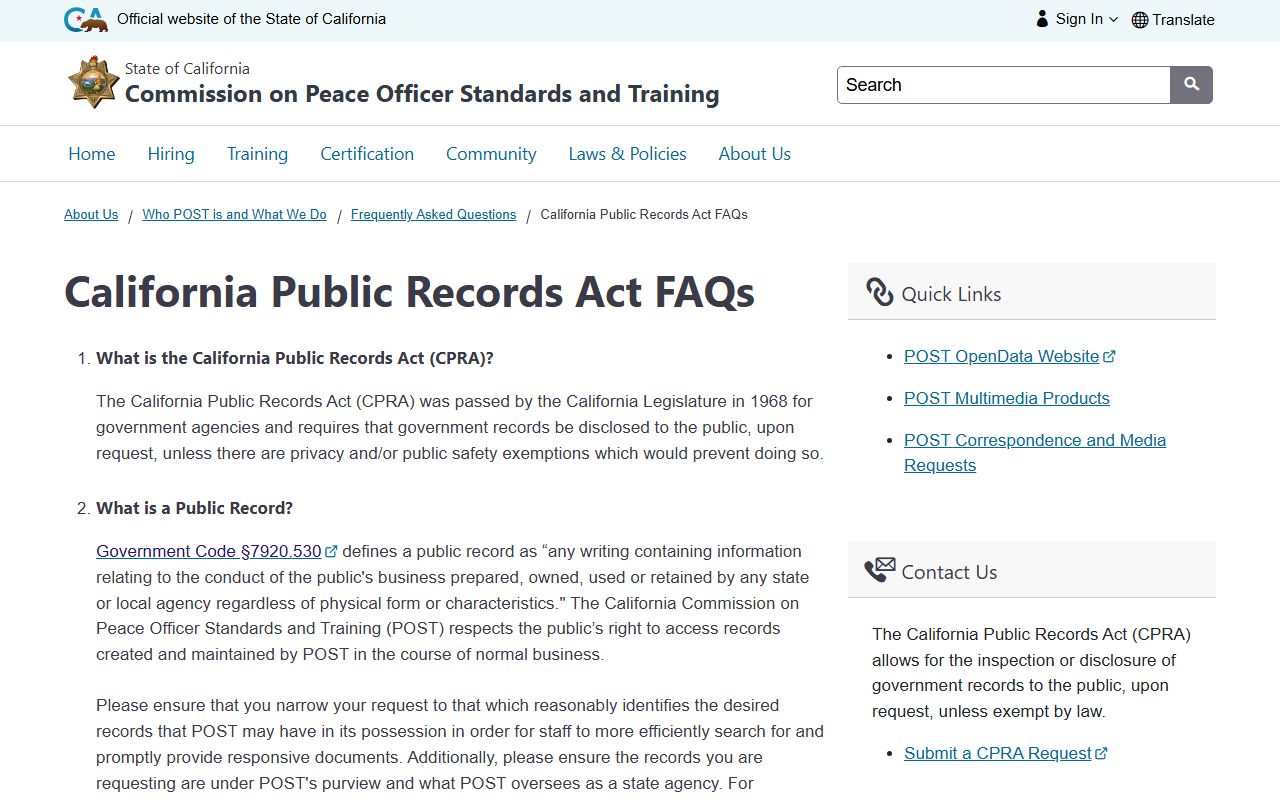
The California Public Records Act gives you the right to access police records. This law is found in Government Code Sections 7920-7931. Any person can make a request. You do not need to be a California resident. You do not have to give a reason for your request. The agency has ten calendar days to respond. They can take a 14-day extension if needed.
To make a request, contact the records division of the agency that has the file. Provide as much detail as you can. Include names, dates, case numbers, and locations. Be specific about what records you want. The agency will search for the records and tell you if they exist. Some records are exempt from release under state law. Agencies can deny requests for ongoing investigations, personnel matters, and certain confidential files in California.
Most agencies charge fees for copies of police records in California. Common fees include:
- Photocopies at 10 to 50 cents per page
- Crime reports ranging from free to $50
- Traffic reports from $1 to $30
- Certified copies with extra fees for seals
- Digital files sometimes provided at no cost
Victims of domestic violence, sexual assault, stalking, or human trafficking can get free copies of their incident reports under California Family Code. Most agencies provide these within five days at no charge. You may need to show proof that you were the victim in the case.
Types of Police Records
Arrest records show when someone was taken into custody by police. These include the person's name, booking date, charges, and bail amount. Many California counties post daily booking logs online. You can search by name or date. These logs are public under Government Code Section 7923.610. Arrest records do not mean the person was convicted. Charges may be dropped or dismissed later.
Incident reports document crimes and other events that police respond to. An officer writes a report after investigating a call. The report includes what happened, who was involved, and what the officer did. You can request a copy if you were a victim or involved party. Some agencies will not release reports to suspects or witnesses. Active case files may be withheld until the investigation closes.
Traffic collision reports are created when police respond to a crash. These show the date, time, location, vehicles involved, and any injuries. California Vehicle Code Section 20012 requires agencies to give copies to drivers and other parties of interest. Most reports are ready within seven to ten days. The CHP and local police departments both create these reports depending on who responded to the scene.
Body camera footage is generally exempt from release under California law. Government Code Section 7923.625 requires agencies to release footage from critical incidents. This includes officer-involved shootings and use of force causing serious injury or death. Agencies have 45 days to provide this footage. They can take 30-day extensions for certain reasons. Other body cam video is not subject to release under the Public Records Act in California.
California Police Records Laws
Penal Code Section 832.7 is the main law for peace officer personnel records. This was changed by SB 1421 and SB 16 to require more transparency. Agencies must now disclose records of officer-involved shootings, use of force, sustained findings of sexual assault by an officer, and sustained findings of dishonesty. These records must be released within 45 days. A delay of up to 180 days is allowed if there is an ongoing criminal or administrative investigation in California.
The Public Records Act in Government Code Sections 7920-7931 sets the rules for all records requests. Agencies must respond in ten days. They can extend this by 14 days if they need more time to search or consult with other offices. If a request is denied, the agency must cite the specific exemption that applies. You can challenge a denial in court. Many requesters work with attorneys or public interest groups when appeals are needed in California.
Penal Code Sections 11120-11127 cover your right to review your own criminal history. You can request this from the DOJ for a $25 fee. The record shows all arrests and convictions on file. You can challenge incorrect information. The DOJ keeps these records until you turn 100 years old. This is the official retention policy for criminal history in California.
Vehicle Code Section 20012 requires the release of traffic collision reports to involved parties. This includes drivers, passengers, owners, and insurers. The law sets out who qualifies as a party of interest. Agencies cannot deny these requests if you meet the requirements in California.
Online Records Portals
California law enforcement agencies use several online systems for public records requests. NextRequest is the most common platform. Counties using NextRequest include Alameda, Del Norte, Fresno, Inyo, Kings, Mariposa, Mendocino, Modoc, Monterey, Napa, Placer, Sacramento, San Benito, San Bernardino, Santa Cruz, Shasta, and Sutter. Major cities like Los Angeles, Oakland, Anaheim, and Santa Ana also use this system. You create an account, submit your request, and track its progress online.
GovQA serves counties like Nevada, San Diego, and San Francisco. Cities including Long Beach and Huntington Beach use this platform. It works much like NextRequest with online submission and tracking. Citizen RIMS is used by smaller counties such as Del Norte, Humboldt, Siskiyou, Lassen, Tehama, Butte, Amador, Calaveras, Tuolumne, Inyo, Mono, and Yuba. This system provides access to booking logs and some incident data in California.
Kern County uses JustFOIA at kerncountysheriffca.justfoia.com. This is a public portal for submitting records requests to the Kern County Sheriff. Some agencies use custom systems built by county IT departments. Check the agency website for the correct portal. If no online option exists, submit your request by mail or email to the records division in California.
Fees and Wait Times
Copy fees vary widely across California. Alameda County charges 50 cents per page for reports. Contra Costa charges the same rate but adds a $40 fee for certified copies. Lake County provides free emailed reports but charges 10 cents per page for printed copies. San Francisco provides all police reports at no charge. Los Angeles charges $27 for crime reports and $18 for traffic reports. Irvine gives reports for free but charges $6 for photos.
Processing times depend on the agency workload and the complexity of your request. Simple requests for your own report often take five to ten business days. Larger requests requiring review of multiple files can take weeks. The law allows ten days for the agency to respond, but this is just the initial response. They may need more time to actually produce the records. Most agencies will tell you an estimated date when you submit the request in California.
Some counties offer rush services for an extra fee. Others prioritize certain types of requests. Domestic violence victim reports must be provided within five days under state law. SB 1421 records should be released within 45 days. General Public Records Act requests have no set deadline beyond the ten-day response requirement. If you do not hear back within ten days, follow up with the agency in California.
Note: Fees and timelines can change, so contact the specific agency for current information before submitting your request.
California Crime Data and Statistics
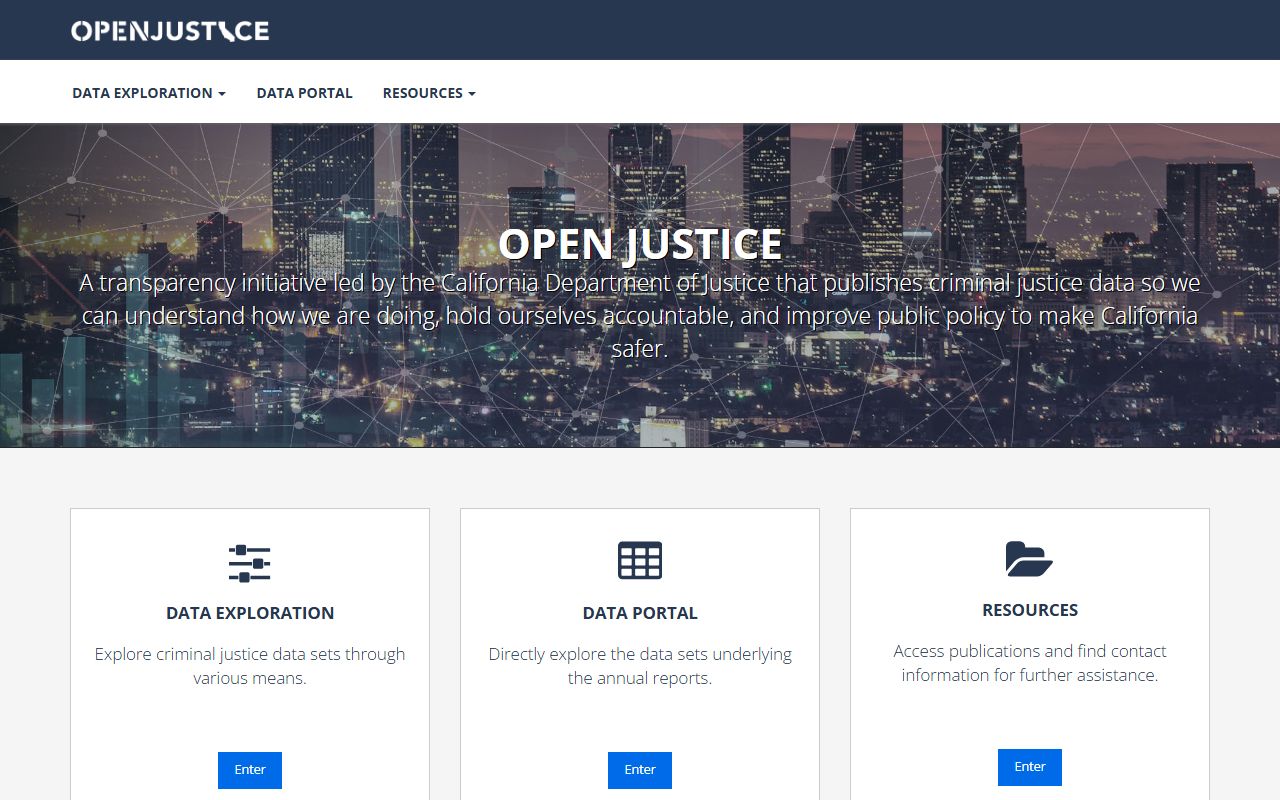
The California Department of Justice runs the OpenJustice data portal at openjustice.doj.ca.gov. This site has crime statistics, arrest data, and law enforcement information for the whole state. You can view data by county, city, or agency. The portal includes interactive maps and charts. This is a useful tool for research on crime trends in California. Data is updated regularly with new reports from local agencies.
OpenJustice covers topics like violent crime, property crime, drug arrests, hate crimes, and officer-involved shootings. You can download datasets for your own analysis. The portal also has information on criminal justice outcomes and jail populations. It does not include individual case files or personal records. For those, you need to contact the specific agency that handled the case in California.
Browse California Police Records by County
Each of California's 58 counties has its own sheriff department with a records division. Select a county below to find contact information, fees, and local procedures for police records in that area.
View All 58 California Counties
Police Records in Major California Cities
Large cities in California have their own police departments with dedicated records bureaus. Pick a city below to learn about police records access in that jurisdiction.